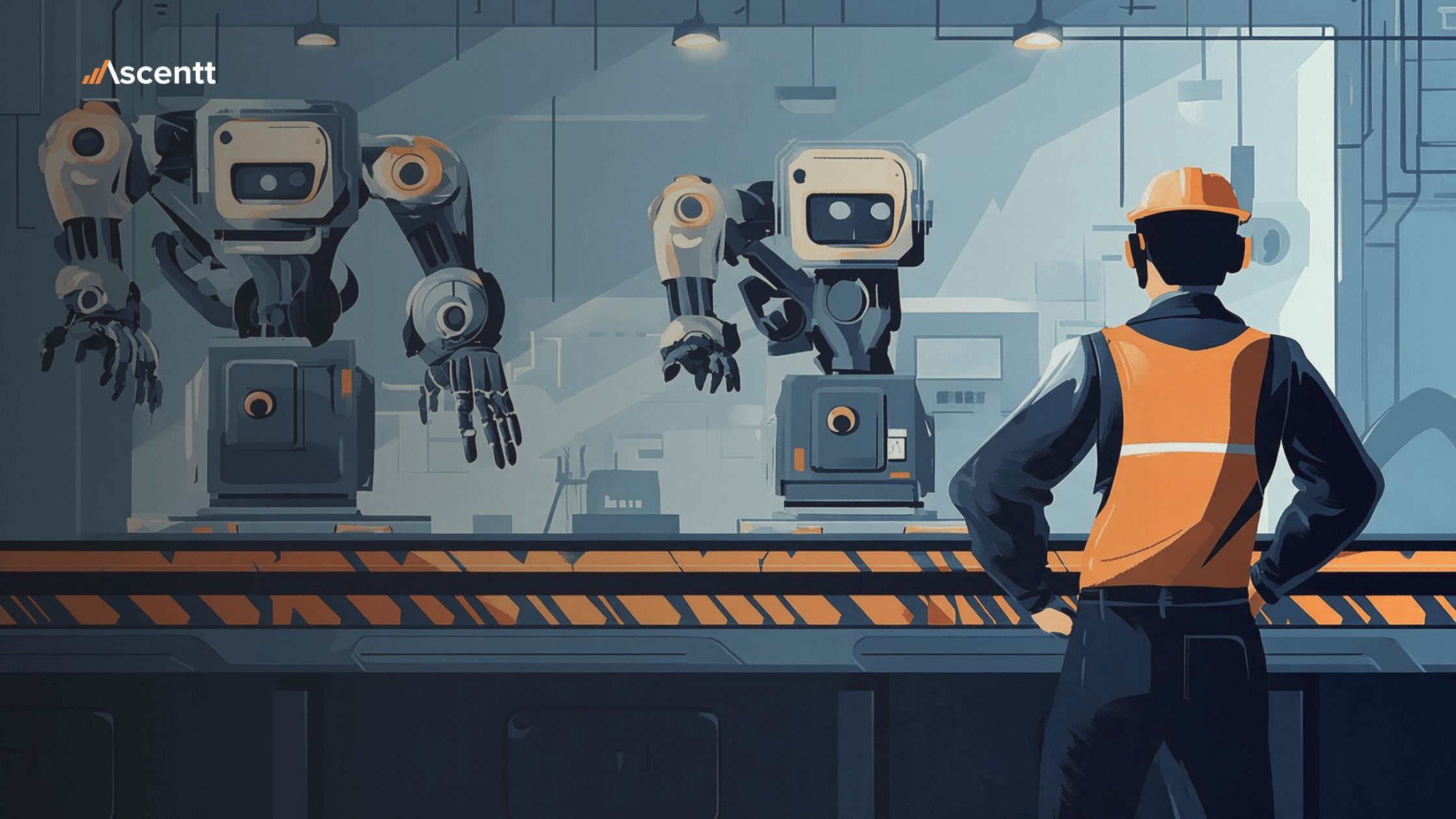
Jeff Bezos is reportedly raising a $100 billion fund to acquire and modernise industrial companies, anchored to his physical-AI lab, Project Prometheus. Most of the commentary has focused on factory automation — robots, dark factories, lights-out production.
That reading is correct, but incomplete. The deeper signal is what happens to global competitive structure once AI removes labour cost as the variable that has shaped manufacturing decisions for the last forty years.
Geography is losing its moat
Manufacturing strategy has, for a generation, been a labour-arbitrage exercise. Where you produced was largely a function of where workers were cheapest. AI does not narrow that gap. It removes it as a strategic input.
The data already reflects the shift. In Capgemini’s 2025 reindustrialisation survey, 56% of large US and European executives said they had invested in nearshoring, reshoring, or a combination of both in the prior year. In the 2026 update, two-thirds of organisations rated physical AI as a high priority for the next three to five years, and 87% said they planned to invest in AI and advanced manufacturing technologies to make reindustrialisation economically viable.
In other words, capital is already moving on the assumption that automation will neutralise the labour-cost advantage of distant geographies. When that assumption plays out, the case for siting a factory based on wage differentials weakens sharply. Production sits where it makes strategic sense — close to demand, close to energy, inside friendly borders — not where labour is cheapest.
On a level playing field, the winner is not the one with the cheapest factory. It is the one with the smartest supply chain.
What replaces labour arbitrage
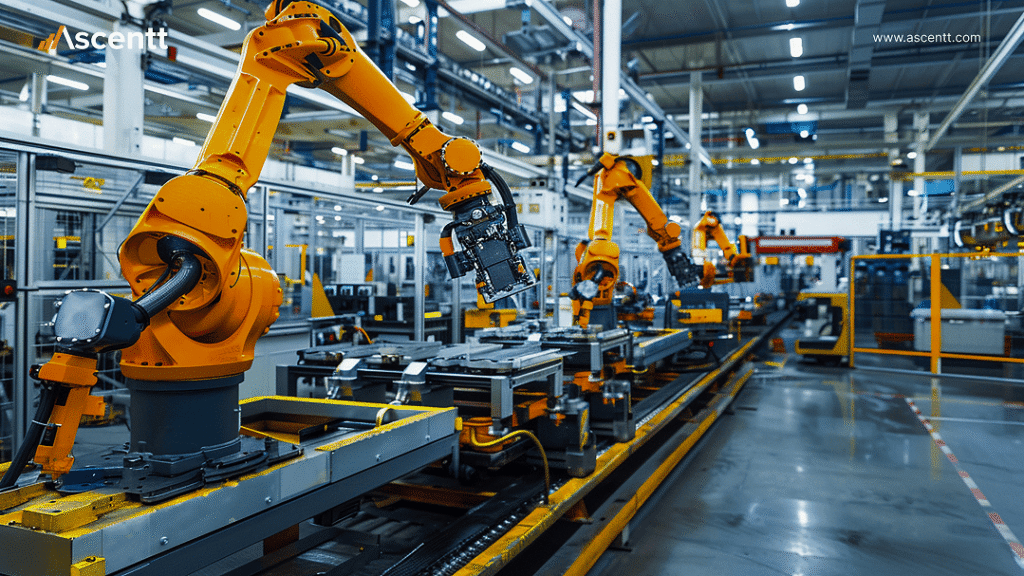
If geography no longer decides who wins, something else must. Three structural realities come into focus the moment labour cost flattens.
Production can sit anywhere. Once a factory’s economics are governed by automation, location is decided by proximity to demand, energy availability, regulatory stability, and political risk.
Demand is everywhere, simultaneously. Buyers expect localised availability, shorter lead times, and configurable products. Markets are no longer concentrated in a handful of export corridors.
Inputs are dispersed and contested. Critical materials and components are sourced across geographies that are increasingly subject to tariffs, export controls, and disruption.
The factory floor becomes a commodity layer. The strategic surface area moves outward — to the network that connects suppliers, plants, distribution, and demand in real time.
Supply chain intelligence is the new moat
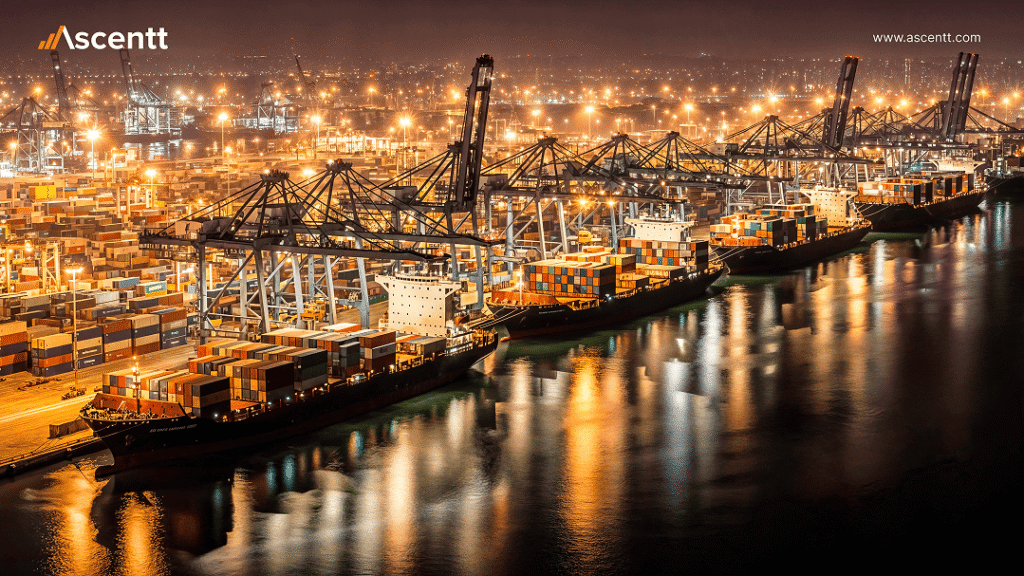
This is where the next decade of manufacturing leadership will be decided. Not in cost-per-unit at the line, but in how intelligently a company orchestrates the triangle of inbound material, in-plant production, and outbound demand — continuously, and in real time.
The capabilities that matter are no longer incremental ERP improvements. They are real-time visibility across multi-tier supplier networks, demand sensing that operates in days rather than quarters, decision systems that re-route and re-source without waiting for human consensus on every exception, and closed-loop learning between what was forecast, produced, and sold.
Physical AI changes how things are made. Supply chain intelligence changes which company can reliably make the right thing, in the right place, at the right moment, at scale. The first will be increasingly available off the shelf. The second is built, and it takes time.
What this means for enterprise leaders

Three considerations follow.
First, manufacturing AI investment should be evaluated against the full value chain, not the factory in isolation. Pouring capital into automated production while leaving demand planning, supplier orchestration, and logistics intelligence underdeveloped delivers a faster factory inside a slower business.
Second, data infrastructure is the precondition. Supply chain intelligence is only as good as the unified, governed, real-time data foundation underneath it. Most enterprises still operate on fragmented systems that cannot answer basic cross-functional questions in hours, let alone seconds. That is the gap to close first.
Third, the window for differentiation is finite. Physical-AI capability will become broadly accessible — that is the explicit thesis behind the capital flowing into Project Prometheus and similar ventures. The differentiated layer will be how each enterprise composes that capability with its own demand signal, supplier network, and operational judgement.
Strategic Implications
The headlines will continue to focus on robots and factories, because they are visible. The decisive shift is less visible and more consequential: the locus of competitive advantage in manufacturing is moving from where you produce to how intelligently you connect production to everything around it.
The factory floor will be table stakes. The supply chain will be the moat.