Picture a plant manager’s Monday morning: an overnight quality alert from line 3, a supplier delay flagged in the ERP, a machine throwing intermittent fault codes in the MES, and a scheduling conflict nobody’s noticed yet because it’s buried in a spreadsheet three systems away. None of this is unusual. What’s unusual is expecting one person to mentally stitch it all together before the first coffee break. That’s the problem manufacturing control towers exist to solve and in 2026, with downtime costs at record highs, the case for having one is no longer optional for most large manufacturers.
The definition, cutting through the vendor noise
A manufacturing command tower is a unified platform that aggregates real-time data from across your operations MES, ERP, SCADA, IoT sensors, quality systems into a single command layer. It combines people, process, data, and organization, enabled by technology, to drive smarter decision-making. It’s worth sitting with that definition for a second, because it’s explicitly not just a piece of software. It’s an operating model that happens to be enabled by a platform.
That distinction matters because it explains why so many “control tower” rollouts underdeliver. Plenty of vendors sell what’s really just a fancier BI dashboard with a control-tower label on it, a nicer pane of glass, but still passive, still dependent on a human noticing the alert and manually deciding what to do about it. A true control tower goes further: it tells you what’s happening right now, uses AI to predict what’s coming next, and helps orchestrate the response, not just display it.
Why the urgency now, in numbers
The financial case has gotten dramatically harder to ignore. Unplanned downtime now costs the world’s largest manufacturers an estimated $1.4 trillion a year combined roughly 11% of their total revenue, up from 8% just a few years ago. Average downtime cost across all manufacturing sectors sits around $260,000 per hour, and in automotive specifically that figure climbs past $2.3 million per hour, roughly double what it was in 2019.
What’s changed is how long it takes to recover once they do. Recent 2026 modeling shows recovery time, not incident frequency, is now the dominant cost multiplier, especially in plants with tightly coupled lines, complex compliance requirements, or limited visibility into what’s actually happening across their operational technology. In other words: the plants bleeding the most money aren’t necessarily the ones with the most breakdowns. They’re the ones that take the longest to figure out what broke, why, and what to do next. That diagnostic lag is precisely the gap a control tower is designed to close.
What a real control tower actually does ?
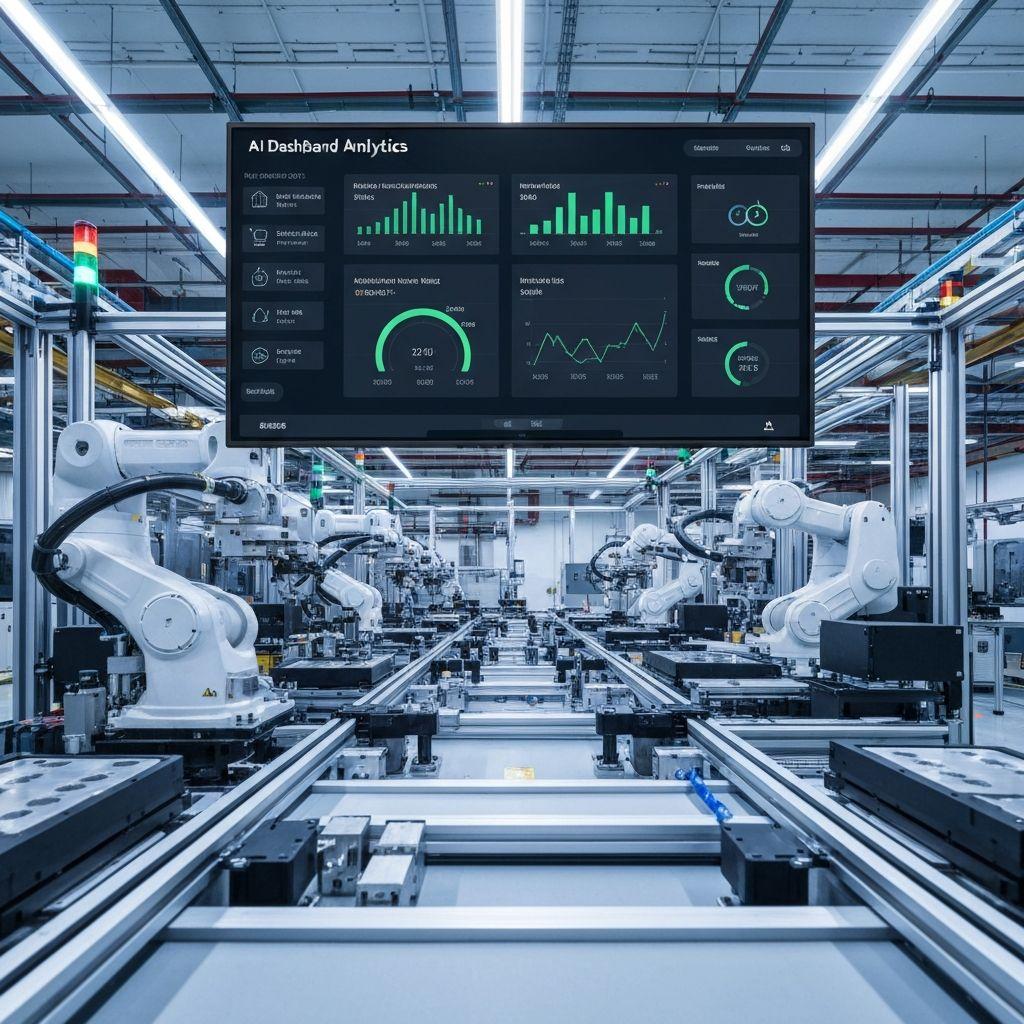
Four things a spreadsheet or a standalone BI dashboard can’t:
- Unifies fragmented data pulling structured and unstructured data from machines, materials, quality systems, and suppliers into one live view instead of a dozen disconnected screens.
- Explains, not just displays instead of showing that a machine went down, it identifies why, and increasingly, that it was about to fail in the first place.
- Predicts and recommends using AI to flag emerging risk before it becomes a full stoppage, and to suggest the specific corrective action rather than leaving interpretation to whoever’s on shift.
- Orchestrates the response routing that recommendation into the right workflow, whether that’s a maintenance dispatch, a schedule adjustment, or an escalation to a specific team, so the loop closes without three separate phone calls.
This is the same evolution decision intelligence platforms are going through more broadly control towers built a decade ago got manufacturers to a single pane of glass and better cross-functional alignment, but most stayed descriptive. They surfaced alerts and left the “now what” entirely to human judgment. The generation being deployed now is built to close that loop.
What this looks like on the floor
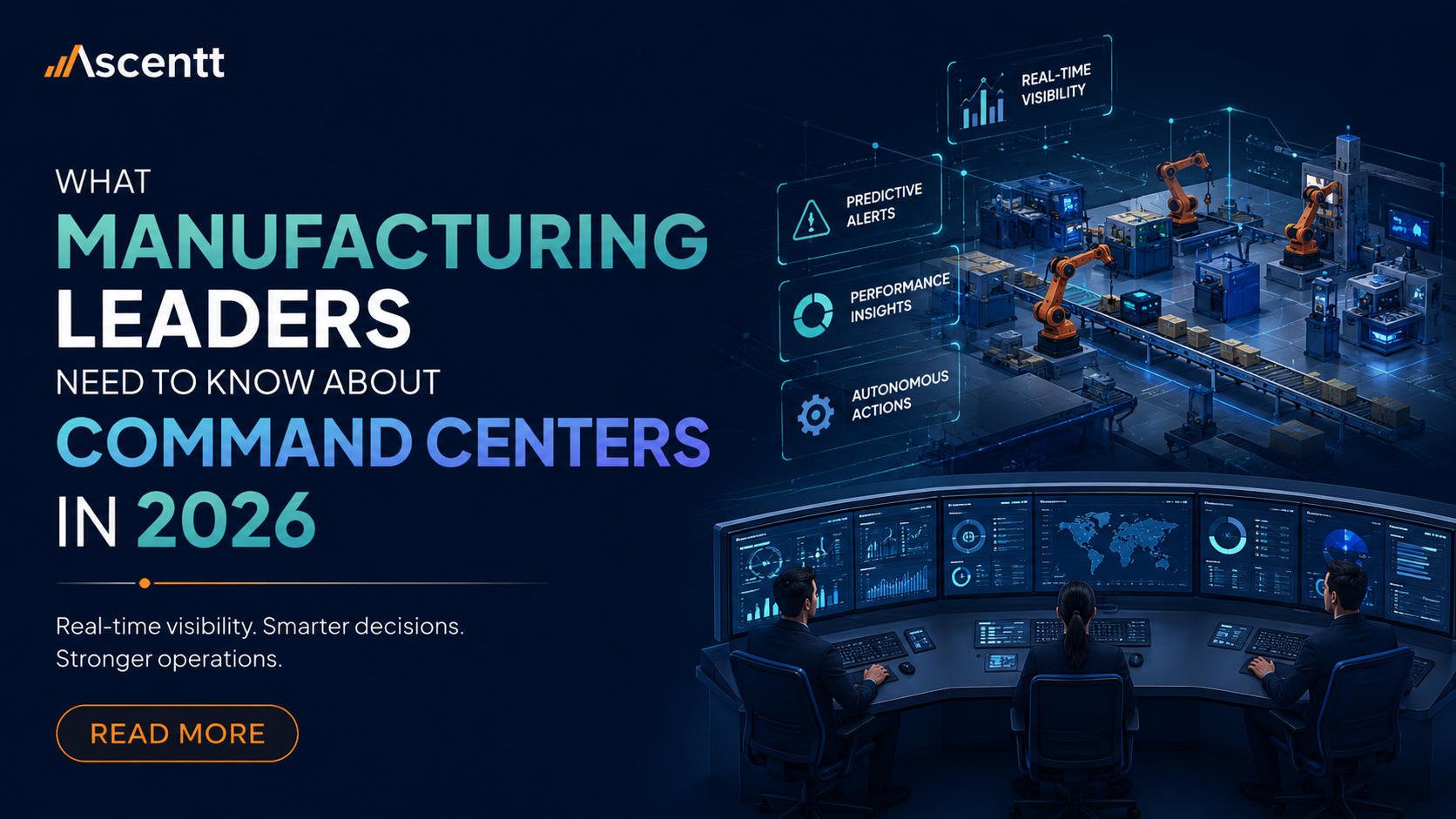
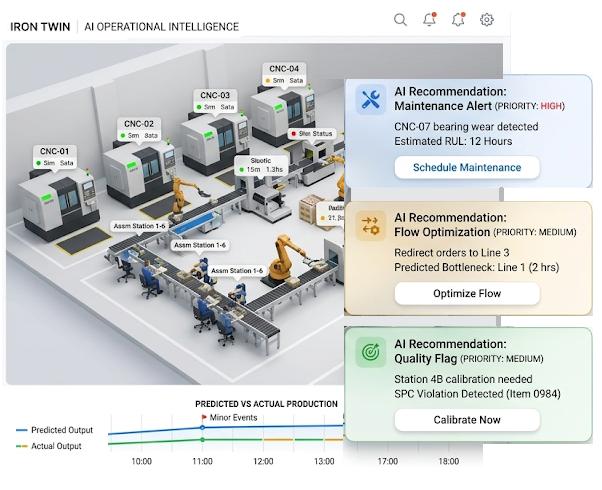
In practice, a modern control tower sits above live plant telemetry weld shop, paint shop, assembly line and instead of just flagging that OEE dipped, explains why and recommends the fix. Ascentt’s Manufacturing Command Centre is built around exactly this shift: an AI-native, agentic layer where specialized agents continuously watch for anomalies, predict degradation before it hits a KPI, and cut root-cause investigation time that would otherwise mean hours of manual correlation across the 4Ms man, machine, material, method. When a factory’s recovery time is the biggest cost driver, compressing that root-cause window from hours to minutes is where the ROI actually lives.
The same logic extends past the four walls of the plant. Discrete manufacturers automotive, high-tech, industrial, aerospace run complex, multi-tier supply chains where a single supplier delay can cascade into a full production stoppage days later. Connecting that upstream visibility to the plant floor is where data engineering does the unglamorous but essential work: building pipelines that can actually handle plant-grade latency and heterogeneous industrial data, not just quarterly reporting.
Why factories actually need one, beyond the ROI slide
Three forces make this a 2026 priority rather than a nice-to-have:
Downtime economics have flipped. With recovery time now the dominant cost driver, the plants without real-time OT visibility are the ones watching incidents run longer than they need to and paying for every extra minute.
Fragmentation is compounding, not shrinking. Aging machinery, siloed systems, and years of point-solution purchases mean most large manufacturers are managing more disconnected data sources today than five years ago, not fewer. A meaningful share of manufacturers still report being unaware of when critical equipment is actually due for maintenance; a visibility gap a control tower is purpose-built to close.
AI has made “predict and recommend” achievable at scale. The technology finally exists to move control towers from passive dashboards to active decision support, but only if the underlying data foundation and organizational operating model are built for it which is why getting the AI strategy and advisory work right upfront, before platform selection, tends to separate the rollouts that scale from the ones that stall at pilot stage.
Conclusion
A manufacturing control tower is the layer that turns fragmented plant, supply chain, and quality data into a single source of operational truth, one that predicts problems early and helps orchestrate the fix, instead of leaving a plant manager to piece it together manually while the clock on recovery time keeps running. With downtime now costing large manufacturers over a trillion dollars a year collectively, the plants that close that visibility-to-action gap first are the ones that will keep the advantage.