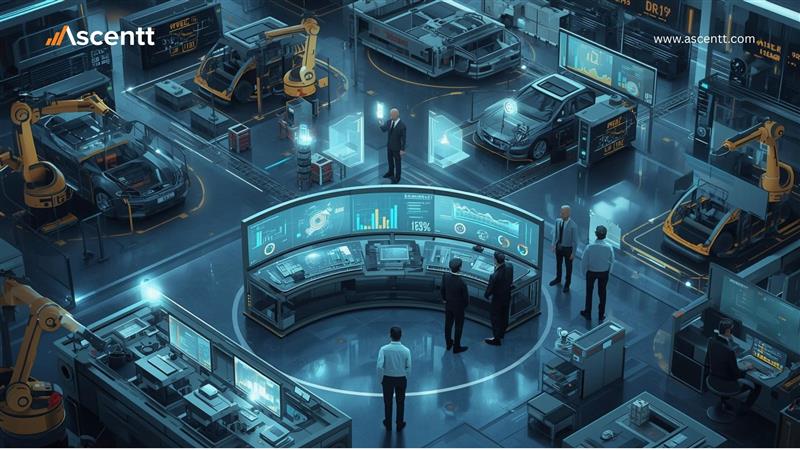
In the evolving landscape of intelligent automation, the next frontier isn’t just about faster or more precise machines—it’s about collective intelligence. A new class of collaborative robotic manipulators, each powered by its own AI “mind,” is reshaping how multi-robot systems think, communicate, and execute. These autonomous systems are not governed by a central authority; instead, they negotiate, vote, and reach consensus, mirroring the democratic decision-making found in human teams.
This architecture leverages advancements in multi-agent systems, distributed AI, and Large Language Models (LLMs)—such as Gemini-2.5 Flash—to enable robots that reason, adapt, and cooperate in real time, unlocking unprecedented levels of flexibility and resilience across industries.
How Autonomous Minds Drive Collective Intelligence
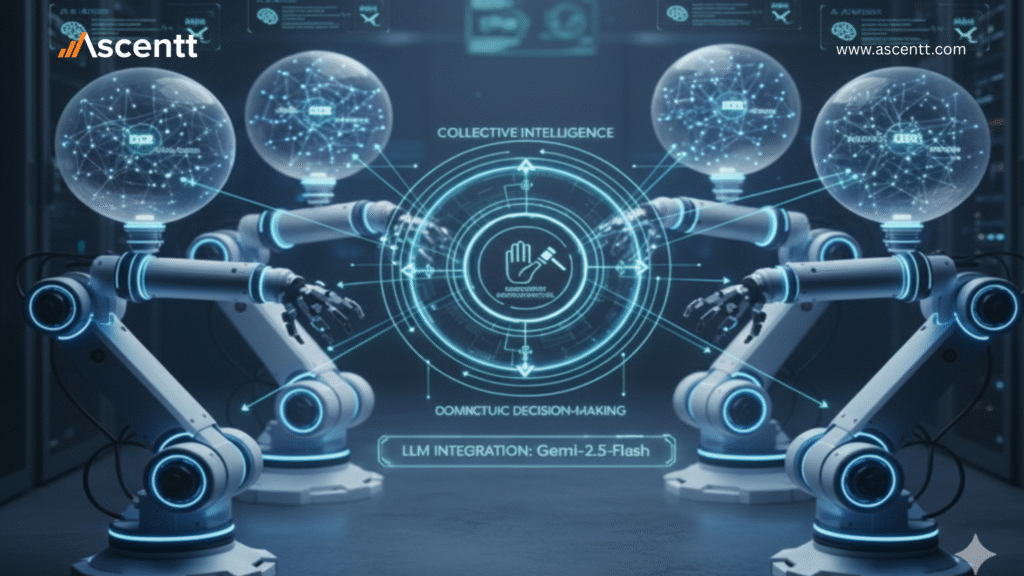
Each robotic manipulator operates as an independent cognitive agent, equipped with its own perception, planning, and decision-making stack. These “autonomous minds” continuously evaluate their environment, generate proposals, and critique peer strategies.
Through this proposal-and-voting framework, the system establishes collective strategies that evolve dynamically—allowing robots to self-organize based on performance, workload, or environmental changes. The result: decision-making that is not only decentralized but also intelligently emergent, where every action reflects the system’s collective reasoning.
Decentralized Collaboration in Action
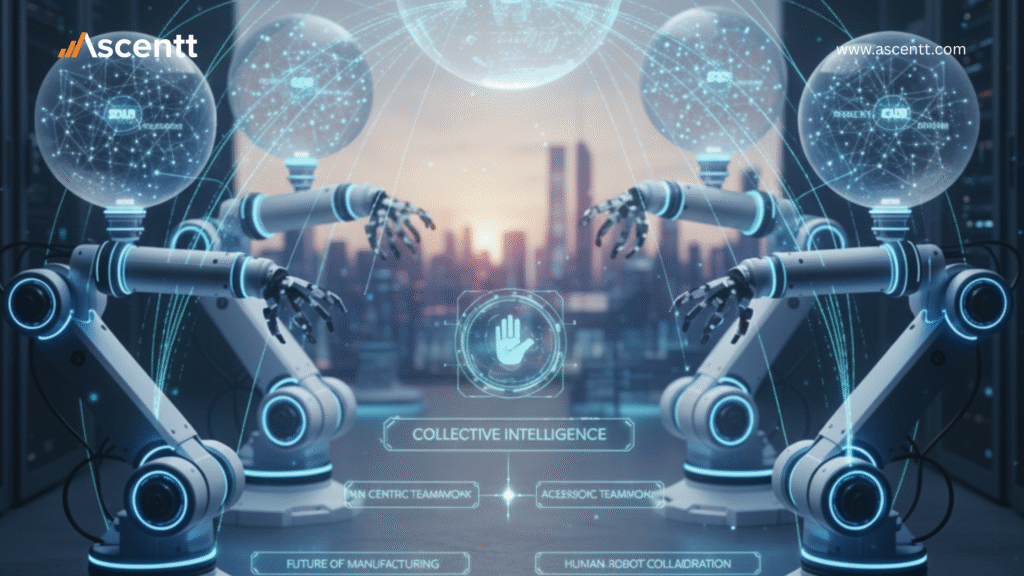
At the heart of this system lies a democratic decision-making protocol. Instead of following static leader-follower hierarchies, robotic agents negotiate and vote on how best to execute a shared goal.
- Continuous Communication: Each manipulator exchanges live performance and status data with its peers through high-bandwidth, low-latency channels.
- Consensus Formation: Proposals for movement, task allocation, or strategy are deliberated in milliseconds. Weighted voting ensures balance between speed and precision.
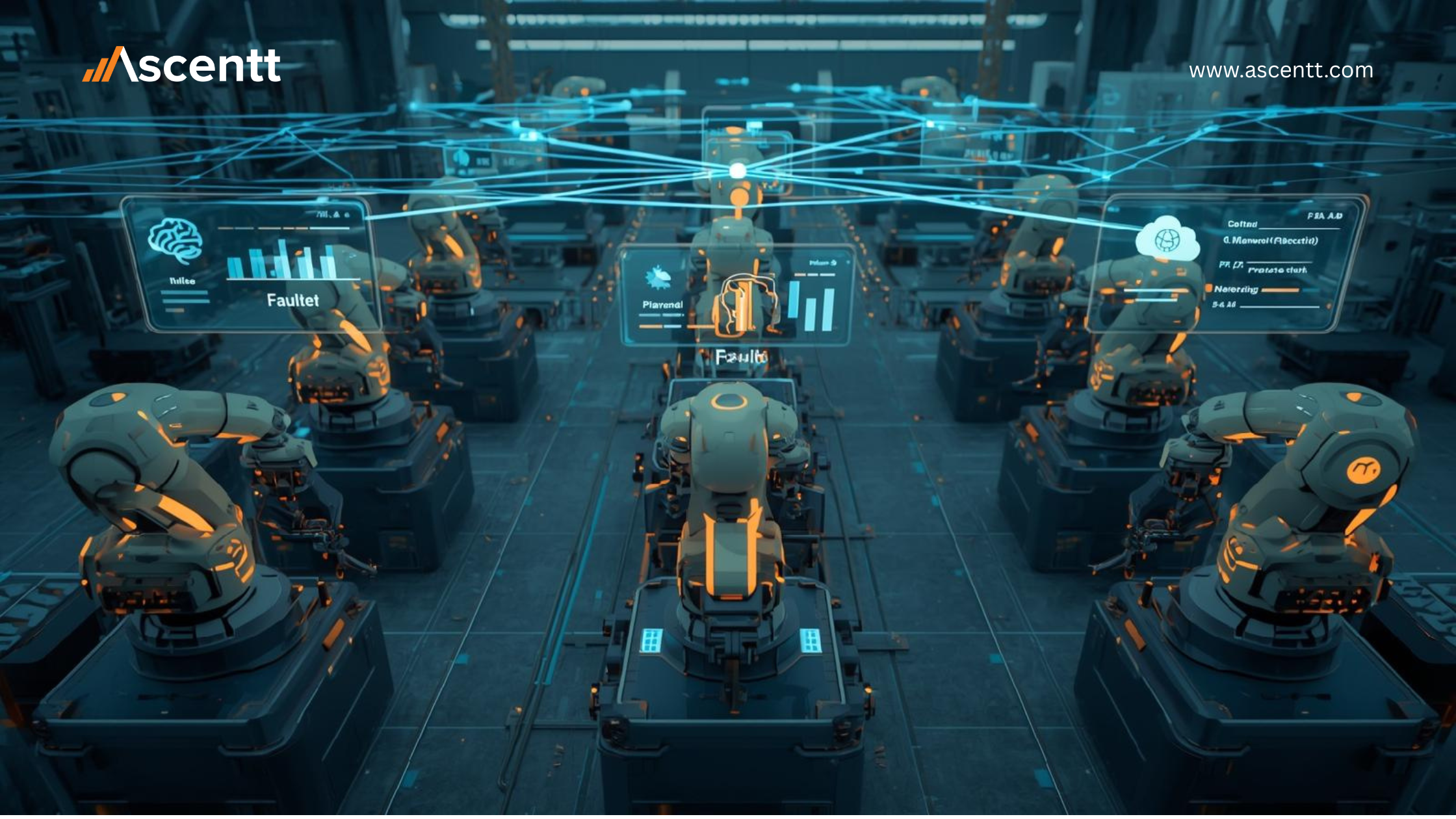
- Adaptive Role Allocation: Robots dynamically assume new roles as context shifts—if one unit encounters a fault, others automatically redistribute its tasks to maintain workflow continuity.
This decentralized model introduces fault tolerance and systemic resilience, ensuring that no single failure halts operations.
Ascentt’s Approach: Engineering Cognitive Synergy
True transformation happens when hardware, AI, and communication layers are seamlessly integrated. At Ascentt, we bring together the disciplines that make distributed cognition practical and scalable:
- Distributed AI Compute: Each robotic agent runs its own localized AI stack—leveraging cloud or on-prem clusters to ensure high-speed inference and independence.
- Communication Middleware: Our architecture enables real-time negotiation and consensus-building across agents, ensuring consistent decisions across distributed nodes.
- LLM-Powered Modularity: With LLM-driven reasoning, perception, and motion planning, robots can adapt to new situations, critique prior decisions, and continuously refine their collective intelligence.
Use Cases: Where Collective Robotics Excels
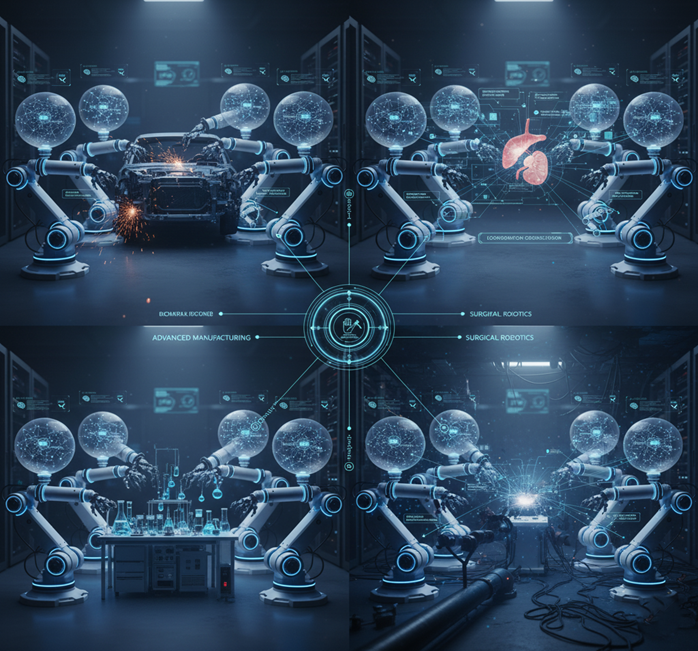
- Advanced Manufacturing: Multi-arm coordination for precision assembly, dynamic load sharing, and real-time optimization to boost throughput and quality.
- Surgical Robotics: Multiple manipulators working cohesively for tool handling, tissue manipulation, and adaptive assistance during critical operations.
- Research Laboratories: Autonomous robotic teams conducting experiments, formulating hypotheses, and adjusting protocols to accelerate discovery.
- Hazardous Environments: Democratic decision-making allows robots to adapt missions in real time, executing repairs or inspections in environments unsafe for humans.
Each application benefits from emergent adaptability—a feature that traditional hierarchical robotic systems simply can’t replicate.
The Bottom Line
Decentralized, AI-powered collaboration marks a defining moment in robotics. By enabling machines to reason collectively, adapt dynamically, and recover autonomously, organizations gain systems that are more intelligent, fault-tolerant, and aligned with the unpredictable realities of modern operations.
At Ascentt, we help enterprises harness the full potential of autonomous, collaborative robotics—building systems that think, negotiate, and act together.
Speak to our robotics and AI experts today to explore how decentralized intelligence can transform your operations.